
I was recently fortunate enough to complete a Permaculture Design Course at Pocket City Farms. Permaculture is an “ethical and environmental design framework for personal and household self-reliance” (Holgrem 2006). It has a range of features to help you design your garden and household to be more (or fully!) sustainable. Here I will take you through the 12 permaculture design principles and some of the ways I have applied them at my place.
1. Observe & Interact
Take your time getting to know your space. Watch your garden at different times of day, different seasons. This will allow you to make decisions that best fit your land and surroundings.
2. Catch & Store Energy
This can be in the form of direct sunlight on different parts of your garden, or the movement of water across your property. This energy can be stored via solar panels or water tanks. Or you can slow water as it moves across your property to allow time for infiltration. A great example of this is the Natural Sequence Farming idea of leaky weirs, which slow water down but don’t hold it back completely i.e. are leaky. This gives water time to spread out across the landscape and slowly be absorbed by soil, supporting plant growth for longer and making the land more drought resistant.
3. Obtain a yield
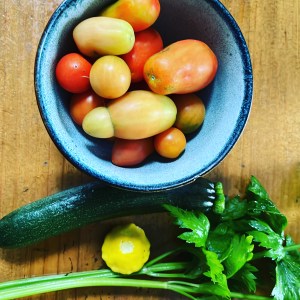
If you are reading this blog it is likely you are keen to obtain a yield. That’s why we are here – to grow our own healthy backyard produce. What steps will lead to the best yield? Are you using the best species for your climate?
For a few years I couldn’t get my zucchinis to fruit (I know, how embarrassing, the world’s easiest crop) but it was because I didn’t have enough pollinators in my yard. So I took steps to address my pollinator issue (see design principle 10 below) and started producing a crop.
Remember a yield could also be foraging for edible weeds, responsibly collecting firewood (I try to only use timber from my place), keeping honeybees, or producing your own power.
4. Apply self-regulation & accept feedback
Watch your garden and listen to what it is telling you. Where does the sun fall at different times of year? Where does the prevailing wind come from? That patch gets great sun in summer but almost none in winter – what can I plant that will work in both seasons? Where does water flow and pool? Why do my apple trees fruit but not my pears (tbh I’m still trying to figure this one out!)?
All gardening has some failure and requires adaptation. The trick is to not let it dishearten you but to learn from it. When I first moved to my place I could not get anything to thrive in my ‘kitchen garden’. I would plant all manner of crops and they would just sit there stunted. I finally figured out that my soil was basically sand and needed significant organic material if it was going to produce actual food for me. (NB this sandy soil is perfect for growing local natives so I haven’t touched it in my biodiversity areas). Also talk to your neighbours or local gardening groups to find out what works best in your location and climate. You may be able to by-pass some hard lessons!
5. Use & value renewable resources and services
So some renewable resources we know well – solar panels converting sunlight into electricity. But you can also consider soil health and fertility a renewable resource. Good soil helps you gain a yield, and soil with high organic matter holds more water, and the organic matter itself is renewable. It may start as food for us, the scraps of which we compost and then turn back into soil to produce another yield.
6. Produce no waste!
When you are conscious of the materials and resources that go into producing items, you become much more sensitive to what you throw away. The key of course is to buy less in the first place. And to buy products that are recyclable or compostable in the next instance.
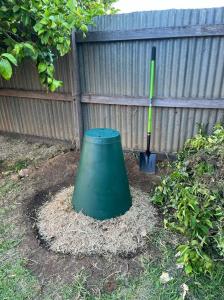
I have become obsessive about retaining organic material on my property. I compost everything I possibly can, only binning difficult invasive weeds that will cause me more grief if I try to compost. Fortunately my Council provides a green bin for garden waste so it also eventually gets composted too. I also have a worm farm and for a long time I had chickens as well which has meant almost all garden and kitchen waste is retained onsite and eventually re-used on the garden. I do this 1. to reduce my waste footprint and 2. if I had to buy compost in it would cost me a fortune so why would I throw such valuable material away! My neighbours up the street have set up a communal composting bin in their front yard which is very cool.
Where it gets trickier is with plastic waste. I recycle, of course, through my Council kerbside collection program. There was a time in Australia where you could also take your soft plastic waste back to the supermarket for recycling. This program has recently ended, forcing me to get much more creative about what I buy. I try and choose plastic free options where possible (e.g. pasta in a cardboard box rather than a plastic bag) and if you have a local food wholesaler you can often bring your own containers.
Check out the 1 million women blog 6 Zero Waste Instagrammers To Inspire You.
7. Design from patterns to details
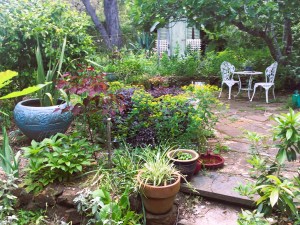
This principle focusses on you and your daily patterns. What parts of the garden do you walk past everyday? How much time will you realistically be able to spend in your garden? What foods do you love to eat? By noting your patterns, you can then design your garden around them. Plant foods you’ll want to harvest every day closest to the house. This quote from Jackie French illustrates this principle perfectly “I’ve learnt what veg to plant near the kitchen door, for me to grab when it’s raining or I want to prepare a meal quickly” (French, 1999 Backyard Self-sufficiency).
8. Integrate rather than segregate
Your garden is actually just a small part of a whole ecosystem. And a whole community. What connections can you build with your neighbours to create ‘community-sufficiency’ rather than just self-sufficiency.
9. Use small and slow solutions
My neighbours recently completely renovated their garden, cutting down trees, clearing the brush under the remaining trees, putting in paving and re-planting. They did all this over a few weekends, installing a Mediterranean style garden. I have estimated that in the process they have reduced the biodiversity of their property from about 200 species to maybe 50 (this is plants and animals only, not insect and soil life). I also think they have no idea that they did this. The property is a holiday home and the garden looks lovely but it did not consider what was already living there at all. It was hard to watch.
I have heard it recommended that you take at least 12 months before you really get carried away in your garden. This provides enough time for you to see how the sun travels across your property in different seasons, to know what other species use your place (either permanently or only sometimes – I have a flock of variegated fairy-wrens that only come by for a few days in late winter), to see what is already working and what might need to change. It can be hard to be patient but this patience may well save something on your property that you might have otherwise unknowingly destroyed. It was a few years before I discovered I have native orchids and antechinus on my property – beautiful! It also means energy and resources aren’t wasted on activities that end up being wrong because you didn’t understand your property well enough at the time.
So take your time. Small gentle steps.
10. Use and value diversity

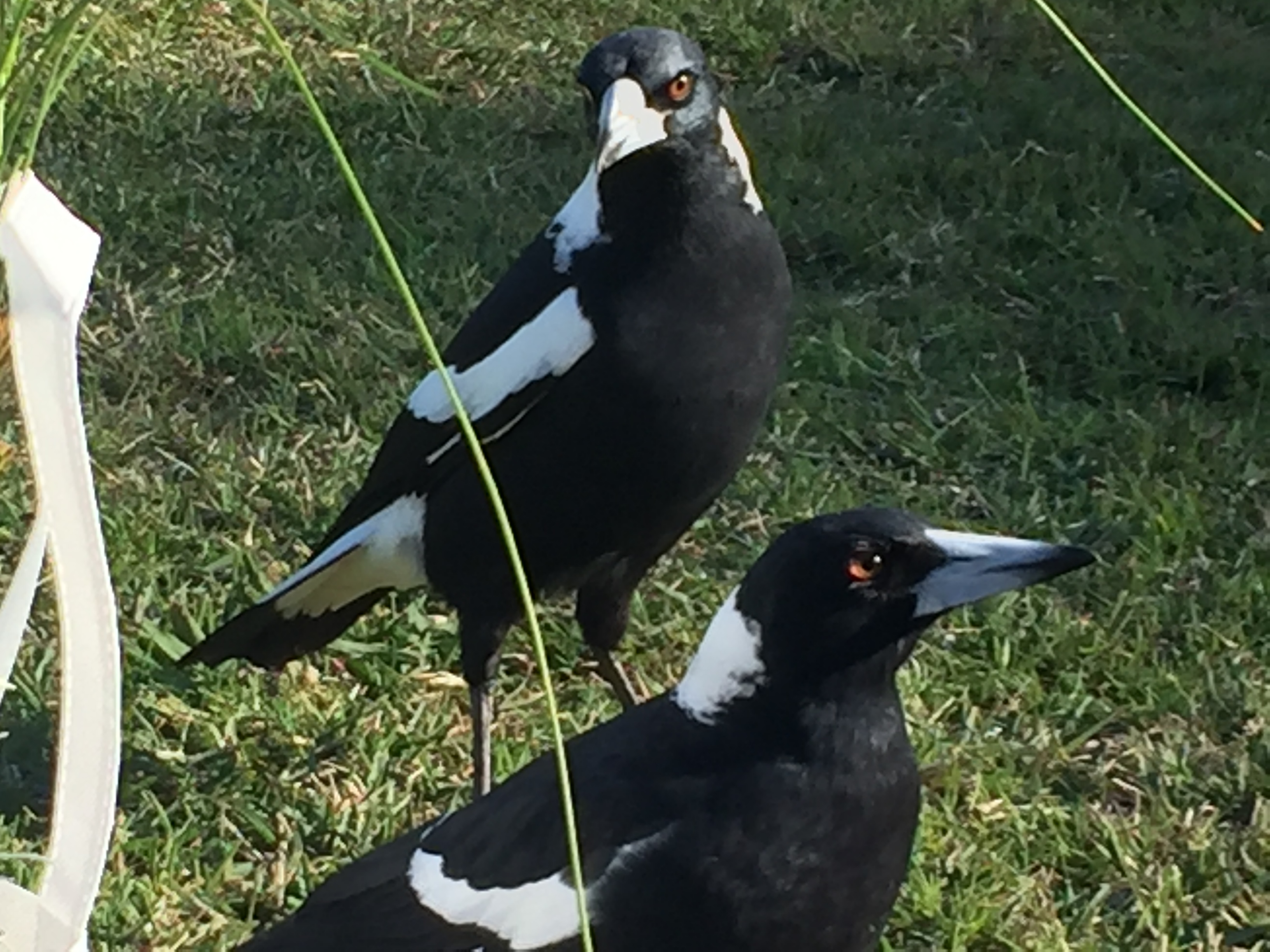
Diversity benefits our gardens. Biodiverse gardens are more resilient. They attract insectivorous species such as small birds and microbats which help to manage insect pests. They attract a wider variety of pollinators improving our yields. They mean we eat a more diverse range of food. And they mean we get to delight in the sheer range of species we also share our space with (like the boobooks owls that were calling last night). A wide diversity of edible perennials means there is always something to eat.
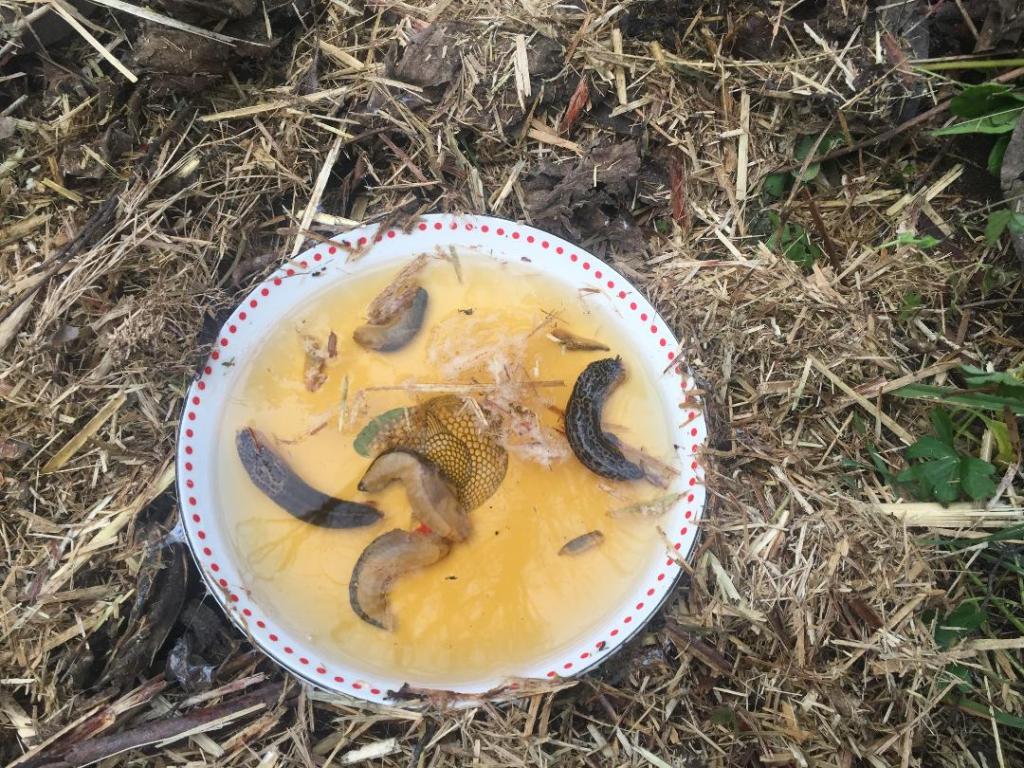
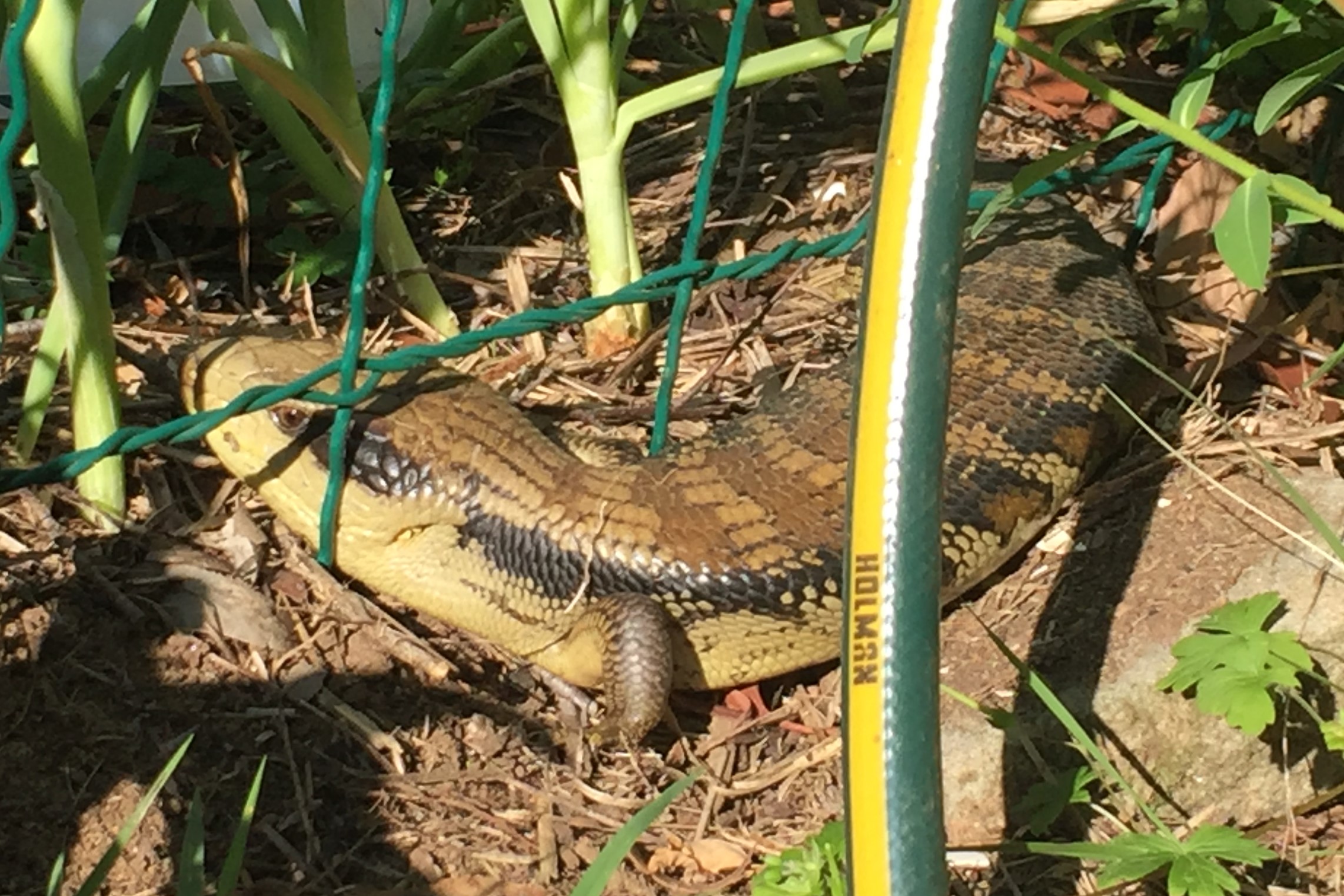
Diversity isn’t all about the number of species though. Diversity in habitats also has benefits. Rocky outcrops or woody debris provides habitat for lizards like Blue-tongues which eat garden snails. Diversity in food layers increases what we can grow (e.g. the permaculture idea of a food forest maximising the yield from a small piece of land) and provides microclimates allowing us to grow a wider variety of plants (more diversity – win!).
11. Use edges and value the marginal
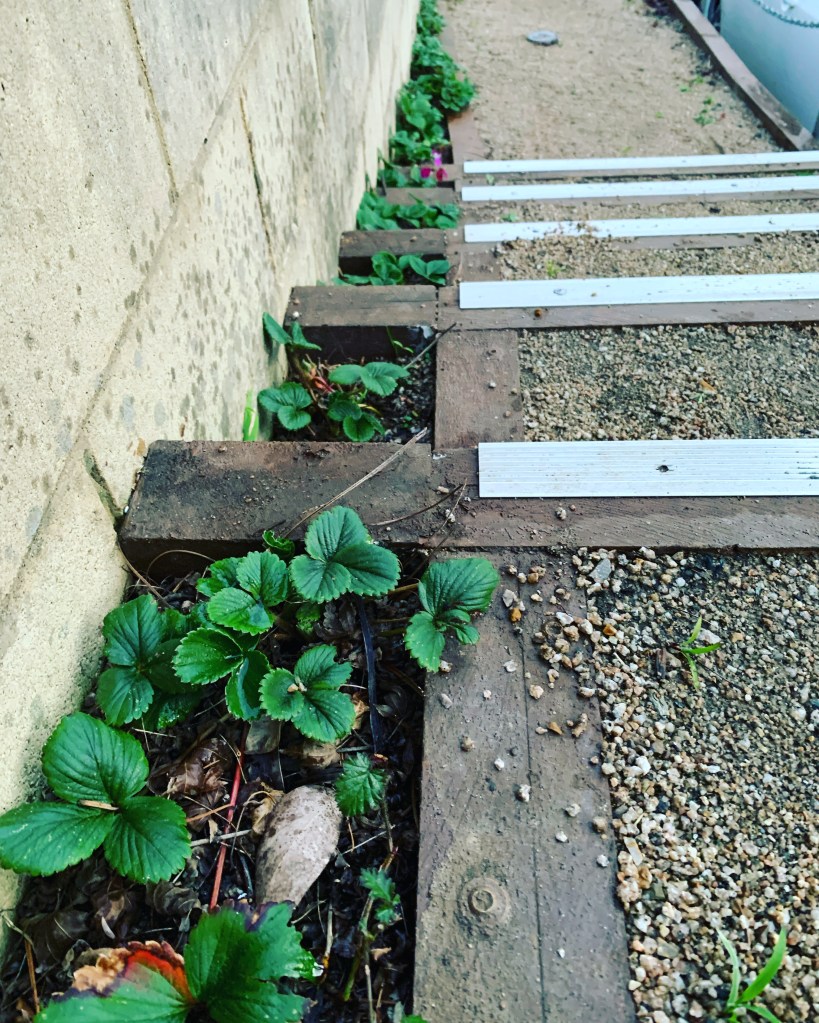
Where on your place do you have areas that are under-utilised? The nature strip? The edge of the driveway? The narrow shaded path on the south side of the house?
I love this picture from my massage therapist’s place where she has planted strawberries in the gap by the stairs. A clever way to implement design principle number 11!
12. Creatively use & respond to change
As we know, life is change, and a garden is never finished. We have always had to respond to change, and now more than ever we need to find creative ways to build resilience and respond to (often rapid) change. What changes do we need to make for our gardens, ourselves, our families or our communities?
References
French, Jackie (1999) Backyard Self-sufficiency, Aird Books
Holgrem, David (2006) Foreword to Morrow, Rosemary Earth User’s Guide to Permaculture, Melliodora Publishing





 My Little Eden